
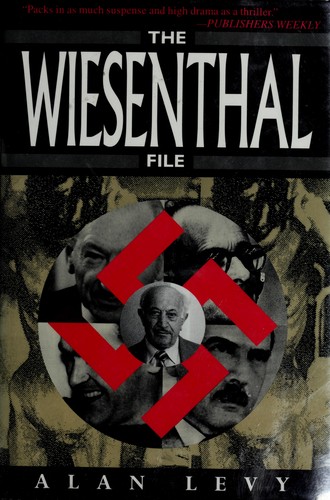
by Alan Levy
Simon Wiesenthal spent four and a half years in Nazi concentration camps during World War II. Eighty-nine family members and relatives were exterminated, and he himself ended the war a living skeleton. Almost fifty years later, Wiesenthal remains undauntedly committed to the cause of justice for the Jewish people and to the pursuit of Nazi war criminals. The cases he has pursued are many - he has brought eleven hundred Nazis to trial - and his name has frequently hit world headlines in connection with such figures as Adolf Eichmann, Franz Stangl, Josef Mengele, and Kurt Waldheim. Of his enormous personal courage there is no doubt. But so long after the war, is Wiesenthal's work still important? Does it have meaning? Is he making a positive contribution to post-Holocaust Judaism? Wiesenthal's answer is resolute: "We live in a modern world. We know there is pollution. The air is bad, the water is bad, the skies are dirty. But there is another sort of pollution that people ignore. In many
V. E. Schwab

Alex Popa
Indie authors send us advance copies. We match them to readers by genre. You get the book free, the author gets an honest review.