🏆 Win $50 — Monthly contest Enter →🏆 Monthly contest — 5 winners get $50 · Enter now →
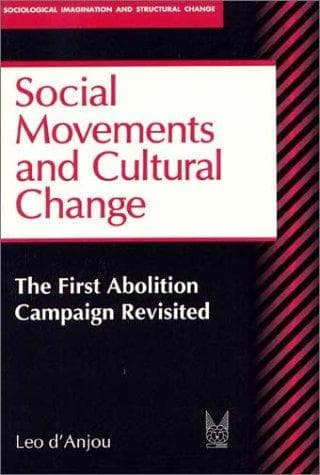
by Leo D'Anjou
In the half decade between 1787 and 1792, thanks to the work of the Abolition Committee in Britain, a vast change occurred in the way slavery and the slave trade were defined. Previously seen as necessary evils, they were seen after 1792 as gross injustices and evils that had to disappear. The present volume uses the abolition movement to show how social movements produce and change meanings and thus bring about cultural change. D'Anjou's analytical strategy has two aspects. It distinguishes the social movement as whole from its component elements, and separates its organizational context from other historical developments, the historical context. In adopting this strategy, collective campaigns are studied as instances of contentious actions that depend on antecedent developments and of characteristics that are central in explaining the effect of those actions on the culture of a society. Devising a tentative model from existing empirical research on social movements, the author tests
No reviews yet. Be the first!
Roald Dahl
N.W. MARTIN