
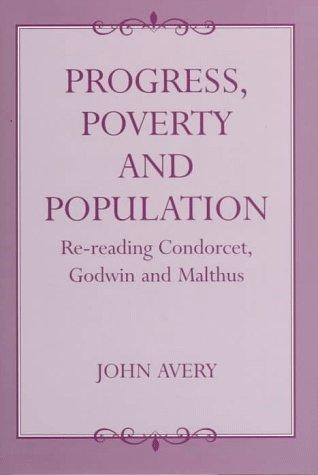
by John Avery
Are poverty, misery, famine, disease and war inevitably part of the human condition? Will the creations of science become uncontrollable and socially dangerous, like Frankenstein's monster? Or can science and education create a world of material plenty - a war-free world, where the benevolent, creative and intellectual sides of human nature will have a chance to flourish? This book tries to answer these questions by tracing the history of a debate which took place among the economists, political philosophers and writers of the late eighteenth and early nineteenth centuries. It was a debate in which the Utopian vision of optimists such as the Marquis de Condorcet and William Godwin was opposed by Thomas Robert Malthus and others, who believed that the benefits of scientific progress would inevitably be nullified by the growth of the global population. This book follows that debate, which also involved people such as Burke, Paine, Wollstonecraft, Coleridge, Wordsworth, Shelley, Byron, Ri

Shonda Terrill

Sky Bluethorne
Indie authors send us advance copies. We match them to readers by genre. You get the book free, the author gets an honest review.